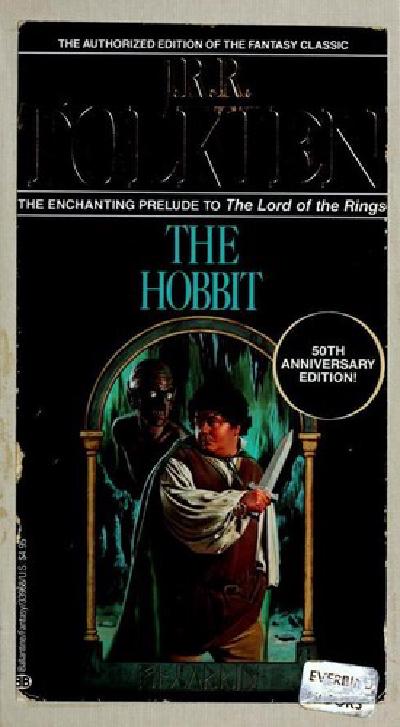
Okay, let’s talk about The Hobbit. If you’re looking for a book that feels like a warm blanket and a cup of tea on a rainy afternoon, this is it. I’ve read a lot of fantasy, but there’s something about The Hobbit that just hits different. It’s not just a story; it’s a total mood.
First, we have to talk about the Shire. I am obsessed with the Shire. The idea of living in a hole in the ground—but like, a fancy hole with a pantry full of seed-cake and a cozy fire—is basically my dream life. Bilbo Baggins is the ultimate relatable protagonist because he just wants to stay home, eat seven meals a day, and avoid anything that looks like an “adventure.” I think we’ve all been Bilbo at some point—that feeling where you’re perfectly happy in your little bubble and the last thing you want is for a wizard to show up and tell you that you’re going to a mountain to fight a dragon.
But then the “Took” side of Bilbo kicks in. I love the internal battle he has throughout the book—the part of him that wants a handkerchief and a nap versus the part of him that secretly wants to see the world. Watching him slowly transition from “I can’t possibly do this” to “I’m actually kind of good at this” is just so satisfying. It’s the classic “ordinary person in an extraordinary situation” trope, but Tolkien does it with so much heart.
And then we get to the journey. The first half of the book is like a great road trip. You’ve got the trolls, the goblins, and then the encounter with Gollum. The riddle game in the dark is one of the most tense scenes I’ve ever read. I love how Bilbo doesn’t win by being a great warrior—he doesn’t even have a sword that’s useful for much—but by being clever and empathetic. The moment he finds the Ring is such a pivotal point, and the way he handles the situation with Gollum shows that Bilbo’s real superpower is his kindness.
As the story moves toward the Lonely Mountain, the vibe shifts. It goes from a whimsical adventure to something much more dangerous. Smaug is just… terrifying. The dialogue between Bilbo and the dragon is a masterclass in tension. Smaug isn’t just a monster; he’s an arrogant, manipulative genius. I could almost feel the heat of the dragon’s breath coming off the page. Bilbo trying to play a game of riddles with a creature that could eat him in one bite is just peak stress.
But the part that really got to me was the ending—specifically the “Dragon Sickness.” Seeing Thorin go from a noble leader to a paranoid, greedy shell of a person was a real gut-punch. It’s a great reminder that greed doesn’t just take your money; it takes your soul. Bilbo stealing the Arkenstone and giving it to the “enemy” just to stop a war was the most “Bilbo” thing he could have done. He wasn’t trying to be a hero; he was just trying to make sure his friends didn’t kill each other over a piece of rock.
And let’s just talk about Tolkien’s world-building. It’s insane. The maps, the languages, the songs—it all feels so lived-in. I love how he sprinkles in these references to ancient histories and lost cities. It makes Middle-earth feel like a real place with a real past, not just a stage for a story. It’s the kind of world you just want to wander around in forever.
If I had to find a flaw, I’d say the “Battle of Five Armies” at the end feels a little rushed. After the meticulous build-up of the rest of the book, the final conflict is resolved pretty quickly. I wanted a bit more of that epic scale, but I guess the book is more about Bilbo’s personal journey than a military strategy guide.
Overall, The Hobbit is just a perfect piece of storytelling. It’s a reminder that you don’t have to be a giant or a wizard to be brave—sometimes the bravest thing you can do is just step out your front door without a handkerchief.
The Quick Rundown
What I loved:
- The cozy vibes of the Shire. I want a hobbit-hole, and I want it now.
- Bilbo’s growth. From a homebody to a diplomatic hero.
- The riddle games. Pure, intellectual tension.
- The world-building. Tolkien is the GOAT of creating believable fantasy worlds.
What I struggled with:
- The ending pace. The final battle was a bit too “fast-forward.”
- The transition from a children’s story to a darker epic can be a bit jarring.
The Verdict: A timeless, comforting masterpiece. The Hobbit is the ultimate “adventure” book because it’s as much about the internal journey as the external one. It’s a beautiful story about courage, friendship, and the importance of a good pantry. 10/10, would definitely go on a quest with some grumpy dwarves.