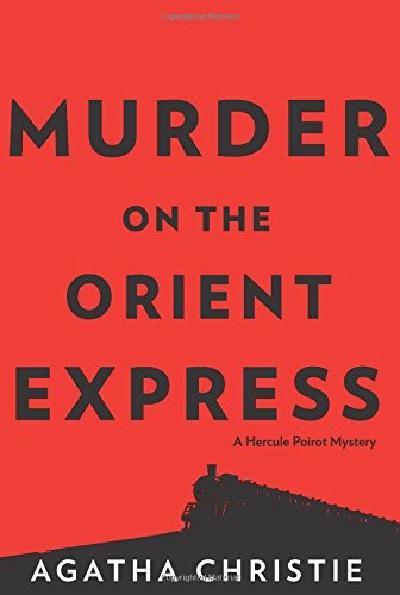
Alright, let’s dive into Murder on the Orient Express. If you like those “locked-room” mysteries where a group of strangers are trapped in one place and one of them is a killer, this is basically the Holy Grail. It’s the ultimate “Who Done It?”
The setup is just perfect. You’ve got a fancy train, a bunch of posh people from all over the world, and then—BAM—a massive snowdrift stops the train in the middle of nowhere. Now you’re trapped in a luxurious velvet tube with a dead body and a killer who is definitely still on board. It’s a total pressure cooker. I love that vibe—the fancy dinners and the polite conversation, while everyone is secretly thinking, “Is the person sitting next to me a murderer?”
Then we have Hercule Poirot. I love Poirot because he’s such a character. He’s this eccentric Belgian guy with a mustache that probably has its own zip code, and he doesn’t even bother with the “detective” stuff. He’s not crawling on the floor with a magnifying glass looking for hairs or footprints. Instead, he just sits there and thinks. He calls it using his “little grey cells.” It’s basically just high-level people-watching. He treats the whole mystery like a giant jigsaw puzzle, and the pieces aren’t clues—they’re the passengers’ personalities.
Reading the interviews is the best part. Everyone is lying, but they’re all lying in different ways. You’ve got the haughty countess, the nervous maid, the arrogant businessman… they all fit these classic mystery “types.” Half the fun of reading an Agatha Christie book is trying to guess the killer based on who seems the most suspicious. I spent the whole book thinking, “Okay, it’s definitely the guy with the weird accent,” or “No, wait, the countess is acting way too normal, it’s her!”
But the twist… man, the twist. I won’t spoil it for anyone (though let’s be real, it’s one of the most famous twists in history), but it’s not just a “surprise.” It’s a total “wait, what?” moment. It doesn’t just solve the mystery; it completely changes the moral stakes of the story.
Suddenly, the book isn’t about “finding the bad guy”; it’s about “what is actual justice?” The victim was a complete monster, and the “criminals” were people who were pushed to the edge. For the first time in a detective story, you’re actually rooting for the killers to get away with it. It puts Poirot in this amazing position where he has to decide: do I follow the law, or do I do the right thing? It’s a rare moment in a cozy mystery where the ending actually leaves you thinking about morality instead of just feeling satisfied that the puzzle is solved.
In terms of the writing, it’s very “invisible.” Christie isn’t trying to win any awards for poetic descriptions. She just gets straight to the point. The prose is lean and functional, which is actually exactly what a mystery needs. Everything in the book is there for a reason. A mention of a handkerchief or a specific time of night isn’t just fluff—it’s a gear in a giant clock. It’s a masterclass in narrative architecture.
The only downside? The characters are a bit thin. They’re more like “roles” than “people.” But in a closed-circle mystery, that’s kind of the point. They’re just there to provide the clues and the red herrings. Once the twist hits, their “type” becomes part of the puzzle, so it actually works.
The Quick Rundown
What I loved:
- The “trapped on a train” atmosphere. It’s so claustrophobic and tense.
- Poirot. He’s just a delight to have as a guide through the madness.
- The twist. It’s a legendary reveal for a reason.
- The moral dilemma. It turns a simple puzzle into a real conversation about justice.
What I struggled with:
- The character depth. They’re a bit one-dimensional.
- The length. It’s a very quick read, and I wanted a bit more of the backstory before the reveal.
The Verdict: A flawless piece of clockwork plotting. Murder on the Orient Express is the gold standard of the whodunit because it knows exactly how to play with your expectations. It’s cozy, it’s tense, and it’s deeply satisfying. If you like puzzles, this is the one to start with.