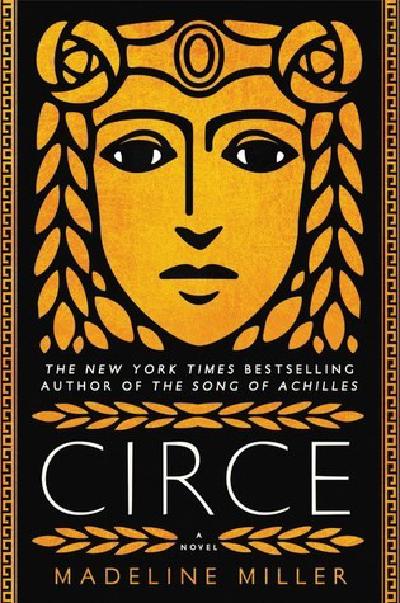
Okay, let’s talk about Circe. First of all, if you’ve ever been the “weird kid” in your family—the one who doesn’t quite fit in, the one who gets ignored at dinner, the one who just feels off compared to everyone else—this book is basically a love letter to you.
Most of us know Circe as that random witch from The Odyssey who turns Odysseus’s crew into pigs. In the original myths, she’s just a plot point. She’s the “bad girl” that the hero has to outsmart. But Madeline Miller basically says, “Hold my drink,” and gives Circe her own entire life story. And honestly? It is so much better than the original myth.
The beginning of the book is just a masterclass in “toxic family dynamics.” Circe is born into this house of gods, and her dad is Helios, the sun god. Now, you’d think being the daughter of the sun would be great, but Helios is basically the ultimate narcissist. He’s all about radiance, power, and being the center of attention. And then there’s Circe, who has this thin, weird voice and no “divine glow.” She’s essentially the black sheep of the solar system. I spent the first few chapters just wanting to give her a hug and tell her to get out of that house as fast as possible.
And then she does. She gets exiled to the island of Aiaia. Now, in any other story, “exile” is a tragedy. But for Circe? It’s a total vibe. It’s like the ultimate Bronze Age cottagecore dream. She has her own island, her own garden, and all the time in the world to figure out who she actually is. I absolutely loved the parts where she’s just… experimenting. She discovers she can do witchcraft—not the “wave a wand” kind of magic, but the “spend ten years boiling roots and talking to lions” kind of magic. There’s something so satisfying about her just working at her craft. It’s not a gift; she actually has to put in the effort. It’s the most empowering part of the book—this idea that you can build your own power from scratch when the world tells you that you have none.
Also, can we talk about the pigs? Because turning men into pigs is a mood. I don’t know about you, but I think we’ve all had those days where we’ve looked at some guy and thought, “You know, you’d actually be more honest if you were a pig.” Seeing Circe just casually turn these arrogant sailors into livestock because they were being jerks was incredibly cathartic. It’s the ultimate “girlboss” move of the ancient world.
Then Odysseus shows up. And look, usually, I find the “hero” of The Odyssey a bit much—he’s a bit of a brag, he’s a bit of a cheat. But in this book, he feels… human. He and Circe just vibe because they’re both absolutely exhausted. They’ve both been through this brutal, endless war, and they’re both just trying to find a way back to something that feels like home. Their relationship isn’t some fairy-tale romance; it’s more like two people sitting in the ruins of their lives and realizing they’re the only ones who speak the same language. It was genuinely touching.
One thing I have to mention: the writing. I am not usually one for “poetic” prose—sometimes it can feel a bit pretentious—but Madeline Miller’s writing is just… chef’s kiss. It feels like drinking a glass of really expensive wine. It’s lush, it’s atmospheric, and it makes the world of the gods feel ancient and heavy. Even when nothing much is happening—like when she’s just weaving on her loom or watching the tide—I was completely sucked in. It’s the kind of book where you want to slow down and just savor the sentences.
If I have one gripe, it’s that the middle of the book can feel a little bit slow. There are some long stretches of time on the island where it’s just “Circe does some magic, a guy shows up, Circe thinks about her dad.” It can feel a bit repetitive. But honestly, I didn’t mind it that much because the atmosphere was so good. I was happy to just hang out on Aiaia for a while.
The ending… man, the ending. I won’t give it away, but the choice she makes at the end is everything. It’s the perfect conclusion to her journey. The whole book is a slow move away from the “eternal” and the “divine” and a move toward the “temporary” and the “human.” It’s a reminder that the things that make life meaningful aren’t the things that last forever, but the things that are fragile and end.
The Quick Rundown
What I loved:
- The “toxic family” drama. Helios is a nightmare and I loved hating him.
- The “Aiaia” vibes. Magic, gardening, and turning annoying men into pigs.
- The prose. It’s genuinely some of the most beautiful writing I’ve read in years.
- The feeling of finally finding your own voice when everyone else is shouting.
What I struggled with:
- The pacing. The middle can drag a bit if you’re looking for a fast plot.
- Some of the other gods felt a bit like caricatures compared to Circe’s depth.
The Verdict: A stunning, luminous read. It’s the kind of book that makes you feel like you’ve been on a vacation in a dream. Whether you love Greek myths or have never read a single one, Circe is a must-read. It’s a story about survival, self-discovery, and the courage to be human in a world of gods. 10/10, would turn my enemies into pigs again.